
What Is Upcycled Furniture? Meaning, Examples and How It Differs from Restoration
What upcycled furniture means, how it differs from restoration, recycling and shabby chic, its drawbacks and which pieces are suitable.


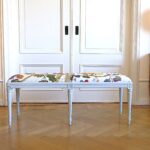
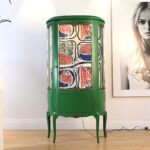
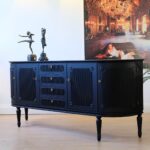
Upcycled furniture is an old, well-made piece that has been repaired and redesigned by hand so that it is worth more, in looks, use or both, than before. Unlike recycling, nothing is melted down; unlike restoration, the aim is not the original condition.
At Plan B Design, a Swedish workshop, this is what we have done for years: we repair the construction of old chests of drawers, sideboards, drinks cabinets and display cabinets from the 1920s to the 1960s, paint them anew, fit suitable hardware and reupholster the seats. In this guide we explain what upcycling furniture covers, how it differs from restoration and shabby chic, when upcycling is worthwhile and where its limits lie.
What Is a Piece of Upcycled Furniture?
A piece of upcycled furniture is an existing piece that has been improved through craftsmanship and design decisions. The “up” in the word is meant literally: the result should be worth more than the starting point, whether visually, functionally or both. A cabinet that has stood in a cellar for decades is repaired, sanded, painted anew and given new details. After that it stands in the living room again and serves its purpose there.
What matters is that the substance is preserved. At Plan B Design the starting material is almost always solid wood or high-quality veneer on a sturdy carcase. That quality is the real raw material. We do not replace the furniture, we change its appearance: a matt black painted finish, frames in gold leaf, a graphic black-and-white pattern, new upholstery or new lighting inside. A piece like this remains one of a kind, because every original brings its own form, its own dimensions and its own history.
In everyday use many people take the term more widely. Even doing up a chest of drawers from a flea market is often called upcycling. In a more precise sense, it makes sense to speak of upcycling when the piece takes on a new form or a new function, and not merely looks as it used to. Under upcycled furniture for sale we show what the result looks like.
What Do You Call It When You Make Old Furniture New?
There are several words for the same craft. They overlap, but they do not mean the same thing. The most important:
- Upcycling: the piece is improved and given a new expression or a new function.
- Restoration: the original condition is recreated as far as possible, with respect for historical materials and techniques.
- Refurbishing: a catch-all term for cleaning, repairing and freshening up, without fundamentally changing the design.
- Redesign: the piece is deliberately given a new look, for example through a different colour, different hardware or a new finish. We use this word for our own work.
- Shabby chic: a style in which signs of wear and worn-away layers of paint are deliberately shown or imitated. It is a design direction, not a process.
The boundaries are fluid. A piece that we restore and then paint in matt black is both at once: the construction is professionally restored, the finish is redesigned. Where exactly the line runs, we have described in a separate article: Furniture restoration or redesign.
Upcycling, Recycling and Restoration Compared
The three terms are often confused. The table summarises how they differ.
| Criterion | Recycling | Restoration | Upcycling |
|---|---|---|---|
| Starting point | Material or waste | Furniture with historical value | Furniture of good substance |
| Approach | Material is broken down and reprocessed | The original is carefully recreated | The piece is repaired and redesigned |
| Aim | Recover raw material | Preserve the original condition | More value and a new expression |
| Result | New product from old material | Furniture as it was when made | One-of-a-kind piece with a contemporary design |
With recycling, the piece loses its form. With restoration, the form stays as it was. With upcycling, the form is kept while the design is deliberately changed. That is also why upcycling is in practice often less laborious than a museum-standard restoration: not every historical layer has to be documented and reproduced. For more on why the effort is worthwhile compared with buying new, see Why restore furniture instead of buying new?
What Makes a Piece of Furniture a Good Candidate for Upcycling
Not every old piece is suitable. When choosing, we look at four things:
- Solid wood or real veneer: it can be sanded, repaired and painted. Under chipboard and thin foil there is little to work with.
- Sound joints and a sturdy carcase: if a piece wobbles, that can often be put right. Broken frames, woodworm in a load-bearing part or damp-damaged bases, on the other hand, make the work disproportionately laborious.
- Form and proportion: a good silhouette remains convincing under a new colour. A poor one is not improved by paint.
- Period: furniture from the 1920s to the 1960s is often solidly built and in forms that combine well with today’s rooms: Art Deco, Swedish Grace, Swedish Modern, Gustavian period furniture.
The last point is not a rule but our experience from the workshop. There is good furniture from other decades too. With every candidate, check the back panel, the drawer runners and the frame joints. How we go about these checks is described in The process, step by step.
How Plan B Design Works
Every piece begins with an honest assessment: what is the substance, what needs repairing, which direction suits the form? Then follow work on the construction, sanding and priming, painting and the details. Finally we check drawers, doors, hardware and, where relevant, the wiring.
Our finishes are deliberately graphic and restrained: matt black paint, black with gold leaf, a black-and-white signature pattern or, occasionally, a deep petrol blue. One example is the drinks cabinet in black with gold leaf, a Swedish Modern piece from the 1940s by Förenade Möbler, Sweden. It was restored, painted in matt black with sharp frames in gold leaf, and is fitted inside with a mirror, lighting, glass holders and a pull-out bar shelf. Another example is the Gustavian chest of drawers in petrol blue with gold: top and legs in matt black, with the original brass fittings preserved.
What is striking about such examples is what we do not change: the proportions, the solid brass fittings and the basic form stay. The expression changes, while the quality of the construction remains that of the original.
Can You Simply Paint Over Old Paint?
Technically yes, but the result depends almost entirely on the preparation. If you merely paint over an old coat of paint, you will often see chipping, brush marks or stains bleeding through later. As a basic rule, the surface must be clean, free of grease and keyed by sanding, followed by a suitable primer and several thin coats of paint.
Veneered furniture needs particular care, because the veneer must be intact and must not be sanded through. Very old paintwork can contain lead and should not be dry-sanded. If you are not sure, have the piece checked. A completely even, hard finish can usually be achieved only with spray painting. We describe the full sequence under The process, step by step.
Is Upcycling Still on Trend?
We cannot present market figures that we have not gathered ourselves. What can be observed, though, is that interest in one-of-a-kind pieces, vintage furniture and long-lasting things has persisted for years, and that many people deliberately look for alternatives to mass-produced furniture when furnishing their homes. More important to us than the trend is the question of what lasts: a well-built piece in solid wood stays useful even when fashions change.
The term itself has become broad and is also used for very simple craft projects. Whether upcycling stays in the furniture world probably depends less on fashion than on two practical reasons: well-built old furniture is plentiful, and in its substance it is often better than much of what is bought new today. Part of that is a matter of taste, part of it is construction.
What Are the Drawbacks of Upcycling?
Upcycling is not a cure-all, and we would like to be open about its limits.
- The quality depends entirely on whoever does the work. A badly painted piece looks worse than an untreated one. Look closely at edges, transitions, drawer action and fittings.
- Not every piece is worth it. If the construction or material is weak, the cost of repair and painting quickly exceeds the value of the result.
- Paint on veneer is delicate. Valuable veneer should not be covered without good reason. Where the grain is beautiful, keeping and oiling it can be the better choice. If the veneer is damaged or stained, however, painting is often the more sensible solution.
- The price is higher than that of simple new furniture. A professionally upcycled piece in solid wood costs more than one made of chipboard. The comparison is only fair, though, if you set materials of equal quality side by side.
- It is a one-off piece. Dimensions, drawer layout and form are fixed. If you need exactly defined dimensions, you must measure and choose before you order.
In short: upcycling is worthwhile when the substance is good, the work is skilled and you like the piece. It is less worthwhile when the lowest price is all that matters.
Upcycling by Type of Furniture
Not every type calls for the same work. Here is an overview of where we typically start.
Chests of Drawers
Chests of drawers are especially rewarding to upcycle: a sturdy carcase, drawers, brass fittings. Repairing the runners, sanding and painting are usually enough. Our article Upcycling a chest of drawers shows what this looks like in practice. You will find current pieces under Chests of drawers.
Sideboards
With sideboards, proportion is what counts. Long, low forms with clean lines look particularly calm in black or black with gold. We describe an example in Upcycling an Art Deco sideboard. You can see all pieces under Sideboards.
Bedside Tables
Bedside tables are small and easy to move. Besides the paintwork, the questions are height, fittings and sometimes a new glass top. What to bear in mind and when the effort is worthwhile, you can read under Upcycled bedside table. You will find the selection under Bedside tables.
Drinks Cabinets
The drinks cabinet is the most laborious piece in our workshop: the outside is painted, while inside a mirror, lighting, glass holders and a pull-out bar shelf are added. How an old drinks cabinet can be renewed, we describe under Upcycled drinks cabinet. You will find available pieces under Drinks cabinets.
Display Cabinets
With display cabinets, glass, lighting and the back panel are what matter. A dark paint makes whatever is displayed stand out. The page Display cabinets offers an overview.
Chairs and Armchairs
With seating, the upholstery comes in addition to the frame. New padding and a well-chosen fabric change the character considerably; one example is our article Reupholstering an armchair.
A single piece of furniture can also shape an entire room. How that works, Furnishing with statement furniture shows.
How to Buy from Us
All pieces in the category All pieces are restored. You enquire without obligation, we clarify dimensions, condition and delivery with you, and payment is arranged by agreement. We quote the delivery cost on request. You can reach us via Contact; the terms are set out under Right of withdrawal and returns. If you have a piece of your own that you would like redesigned, we also take on customer commissions, see Restorations.
Frequently Asked Questions
What is the difference between upcycling and restoration?
Restoration recreates the original condition as precisely as possible. With upcycling, the piece is repaired and at the same time redesigned, for example with a different colour, new hardware or new upholstery.
Is upcycling more sustainable than buying new?
As a rule, yes, because an existing piece continues to be used and no new production is needed. We cannot give a blanket figure; it depends on the material, transport distances and the paints used. You will find more on weighing this up under Why restore furniture instead of buying new?
Which furniture is suitable for upcycling?
Ideally pieces with a sturdy carcase in solid wood or real veneer, sound joints and a good form. Chipboard furniture with foil is only of limited suitability.
Can I have a piece of my own upcycled?
Yes, we take on customer commissions. Send us photos and dimensions via Contact and we will assess whether the work is worthwhile.
Is upcycling furniture also worthwhile in terms of price?
That depends on the piece. A piece with good substance costs less as a finished result than comparable new furniture in solid wood. With weak construction, the effort quickly outweighs the benefit, and we then advise against it.