
Art Deco sideboard – a statement piece with a modern finish




An Art Deco sideboard is among the most rewarding pieces when you want to combine classic form with a more modern, confident expression. The form is often timeless, but surfaces, details and finish can lift the piece from “vintage” to a contemporary statement piece that works in modern homes.
This guide is for anyone who wants to understand what makes Art Deco in a sideboard – and how a redesigned piece acquires an Art Deco feel without looking like an imitation.
Would you like to see examples straight away? This way: Sideboards or browse All pieces.
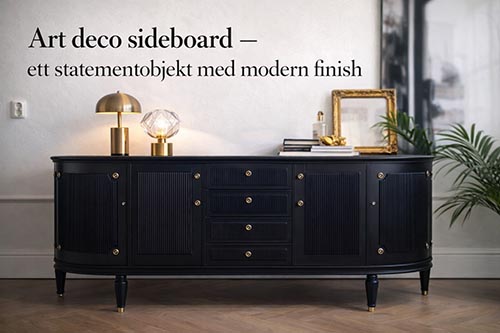
What defines an Art Deco sideboard?
Art Deco often thrives on a combination of elegance and clarity: pure lines, well-balanced proportions and a sense of luxury in the details. In a sideboard this is often seen in:
- Strict, symmetrical form
- Rounded corners or gently curved fronts
- Ribbed or fluted details
- Contrast between matt and glossy
- Metal accents, such as brass, on fittings, feet or strips
Many older quality pieces already have these proportions – which makes them the perfect starting point for a redesign.
When Art Deco meets modern design
What really makes an Art Deco sideboard interesting today is the contrast: a classic form that acquires a new language through colour, surface and finish. It might be a deep, saturated shade, a more graphic finish or renewed fittings that sharpen the overall impression.
This is also where upcycled furniture differs from traditional restoration. A redesign can bring out the Art Deco feel while creating an expression that works in a modern setting.
More on the basics: What is a upcycled piece of furniture? and the difference between furniture restoration and redesign.
Why a sideboard is the perfect statement piece
A sideboard is practical and visually striking at once. It takes up space in the right way – without dominating a room as a sofa or a dining table does. That makes it ideal for anyone who wants a clear design object and functional storage at the same time.
- Storage that is genuinely used in everyday life
- A natural focal wall for art, mirrors or lamps
- A piece that works in the hallway, living room and dining room
More on furnishing: Statement furniture – how to furnish with a piece that takes up space.
How to choose the right Art Deco sideboard
1) Pay attention to the proportions
An Art Deco-inspired sideboard usually looks balanced: either strictly symmetrical or gently curved. Consider whether the room benefits from straight lines or whether a rounded front softens the overall look.
2) Choose the expression through the surface
The surface treatment makes an enormous difference. Matt looks more modern and sculptural, while glossier or lacquered surfaces give more of a classic Art Deco feel. Contrasts between surfaces also create a more graphic expression.
3) The details decide the whole
Fittings, feet and strips make a piece look exclusive. Small adjustments here lift a sideboard from “lovely” to “extraordinary”.
Would you like to widen the search to other types of furniture from the same style world? See also: Cabinets, Display cabinets and Chests of drawers & bedside tables.
A redesigned Art Deco sideboard – what happens in the process?
When Plan B Design redesigns a sideboard, the aim is usually to preserve the basic quality and proportions while lifting the expression, impression and finish. This ranges from work on the construction to new surface treatment and details that sharpen the lines.
The process in detail: The process behind a upcycled piece of furniture.
View sideboards
Would you like to see current pieces and find a sideboard that suits your style?
Frequently asked questions about the Art Deco sideboard
What is the difference between Art Deco and simply “vintage”?
Art Deco is usually characterised by clearer proportions, symmetry, elegant contrasts and a sense of luxury in the details. “Vintage” is broader and can mean many expressions and eras.
Does an Art Deco sideboard work in modern homes?
Yes. An Art Deco sideboard often works particularly well in modern surroundings, because the contrast between classic form and contemporary furnishing creates tension. It becomes a statement without the room feeling themed.
How do you get an Art Deco feel without it looking old-fashioned?
The key lies in surface and finish: modern colouring, well-considered contrasts and renewed fittings keep the Art Deco references while giving a contemporary expression.
Back to the main guide: Upcycled furniture – where classic design meets modern form.