
White, Blue or Colourful Chest of Drawers – The Colour Guide
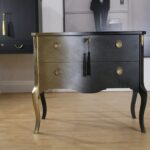
The white chest of drawers is the most searched for, and often the most demanding. Anyone who works with colour on furniture soon notices that white rarely delivers the result you imagine. In this article we go through the alternatives to black: white chest of drawers, grey, blue, petrol, mint green, wood and colourful. We explain what each colour does to a room, how to choose according to wall, floor and light, and how we lacquer colours so that they last. Black has an article of its own: black chest of drawers. You will find the overview of all chests of drawers in the chest of drawers guide.
White chest of drawers: bright, but demanding
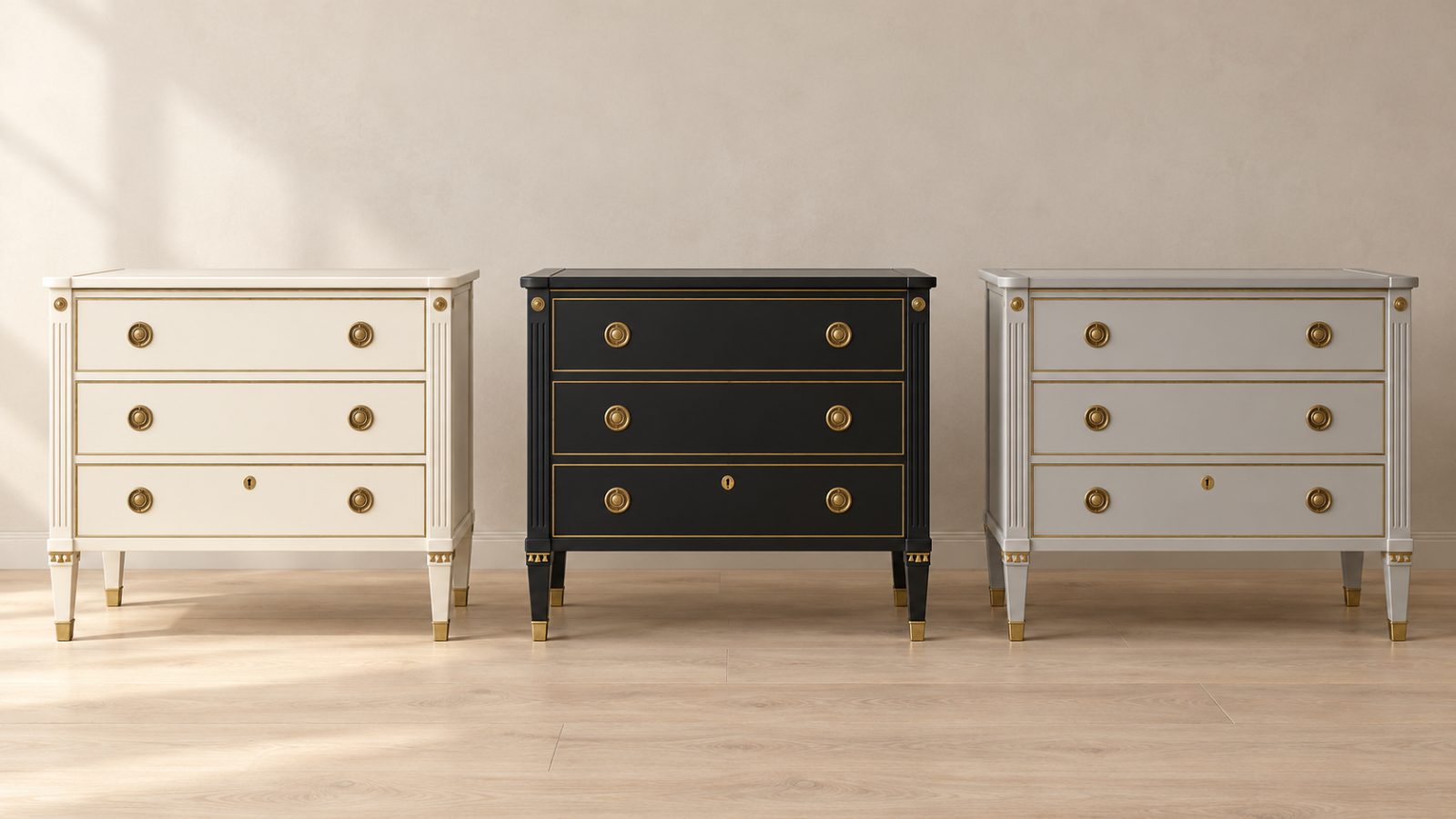
White makes the room brighter and the chest of drawers visually smaller, and that is the whole point of a white chest of drawers in a small, dark room. There are three drawbacks. White shows everything: fingerprints, scratches, lacquer that has yellowed after a few years in the sun. White makes an old piece look flat, because carvings and mouldings cast no shadow. And white against a white wall becomes nothing. If it is to be white, choose a broken, warm white with a satin-matt finish, set against a wall in a different colour. For Gustavian furniture, a greyish white is historically correct. White chests of drawers for the bedroom are also in demand; here the rule is that white makes the room feel cold if the walls are white too. Read more in chest of drawers in the bedroom.
Grey chest of drawers: the Gustavian original
Pearl grey is the historically correct colour for Gustavian furniture and works best in bright, classical rooms with linen and white walls. Grey is forgiving, shows little wear and ages beautifully. The danger is that it becomes tame: grey chest of drawers, grey wall, grey sofa. Place a grey chest of drawers against a warm wall or beneath a strongly coloured picture, or give it brass fittings that shine. The nuances are explained in Gustavian chests of drawers.
Blue and petrol chests of drawers
Blue is the colour with which you can give a room character without becoming loud. A dark petrol blue looks refined, almost like a black with depth, and combined with gold or brass it creates a very elegant tone. It suits pale walls, wooden floors and natural materials. An example from our current stock is the Gustavian chest of drawers in petrol blue with gold (€980): the clear, straight lines of the Gustavian form carry the strong colour. A light blue, by contrast, has a country-house feel and suits Scandinavian country style.
Mint green, green and colourful chests of drawers
A mint green chest of drawers or one in sage brings freshness and suits pale wood and white linen. Dark green is the calmer variant and works much like black. A colourful chest of drawers in red, yellow or with a hand-painted pattern is a jewel and belongs in a room that is otherwise restrained. The principle: the smaller the piece, the bolder the colour may be; with a large chest of drawers, a single colour is enough. A small piece in red can become the focal point of a room. Read more about small models in small chest of drawers, and about the principle in furnishing with statement pieces.
Wood: when the wood stays visible
Brown is wood that is allowed to be wood. A chest of drawers in mahogany, walnut or dark-stained birch brings warmth and weight and suits rooms with plenty of light and a pale floor. The drawback: brown can easily look "old" in the wrong setting, especially against dark parquet. Oak is paler and more modern, but heavy in expression and rarely beautiful on old chests of drawers, because these are mostly made of birch or mahogany. Our rule: if the chest of drawers has a beautiful, intact veneer with marquetry or flamed birch, we leave the wood as it is. If the veneer is damaged, faded or uninteresting, we lacquer. The background is set out in Scandinavian vintage furniture.
How to choose the colour to suit the room
- White walls, oak floor: black, dark green or petrol. White disappears, brown becomes heavy.
- Dark walls: pearl grey, which brightens the room. White becomes glaring.
- Small, dark room: greyish white or pearl grey, never pure white. Satin-matt finish.
- Coloured walls: black or wood; avoid grey.
- Hallway: always dark; see narrow chest of drawers for the hallway.
Repainting a chest of drawers: how we go about it
We sand off the old finish, repair veneer and cracks, prime, sand between coats and spray-lacquer in several thin layers. White needs one more coat than dark colours to cover. Fittings are restored separately, and sticking drawers are given new runners. You can see all current pieces in the category Chests of drawers and bedside tables; for the process, see the process of a redesigned piece of furniture.
White chest of drawers with an accent: keeping white interesting
If it absolutely has to be white, there are ways to keep it alive. Brass or gold fittings add contour. A dark top, in stone for example or lacquered black, grounds the piece. A contrasting frame in grey or black on the drawer fronts makes the mouldings visible. And above all: place the white chest of drawers against a wall with colour or texture, not against pure white.
Frequently asked questions
Can I paint a veneered chest of drawers white myself?
Yes, if the veneer is intact: sand lightly, prime with an adhesion primer, then apply two to three coats of paint. The brush leaves texture, the roller is somewhat more even, and the spray gun the most even. Allow for one more coat with white.
Which white suits best?
A broken, warm white in a satin-matt finish. Pure white looks cool and shows every mark.
Does a colourful chest of drawers suit a calm interior?
Yes, especially there. A single small coloured chest of drawers works as an accent. Several colourful pieces in the same room, on the other hand, look restless.