
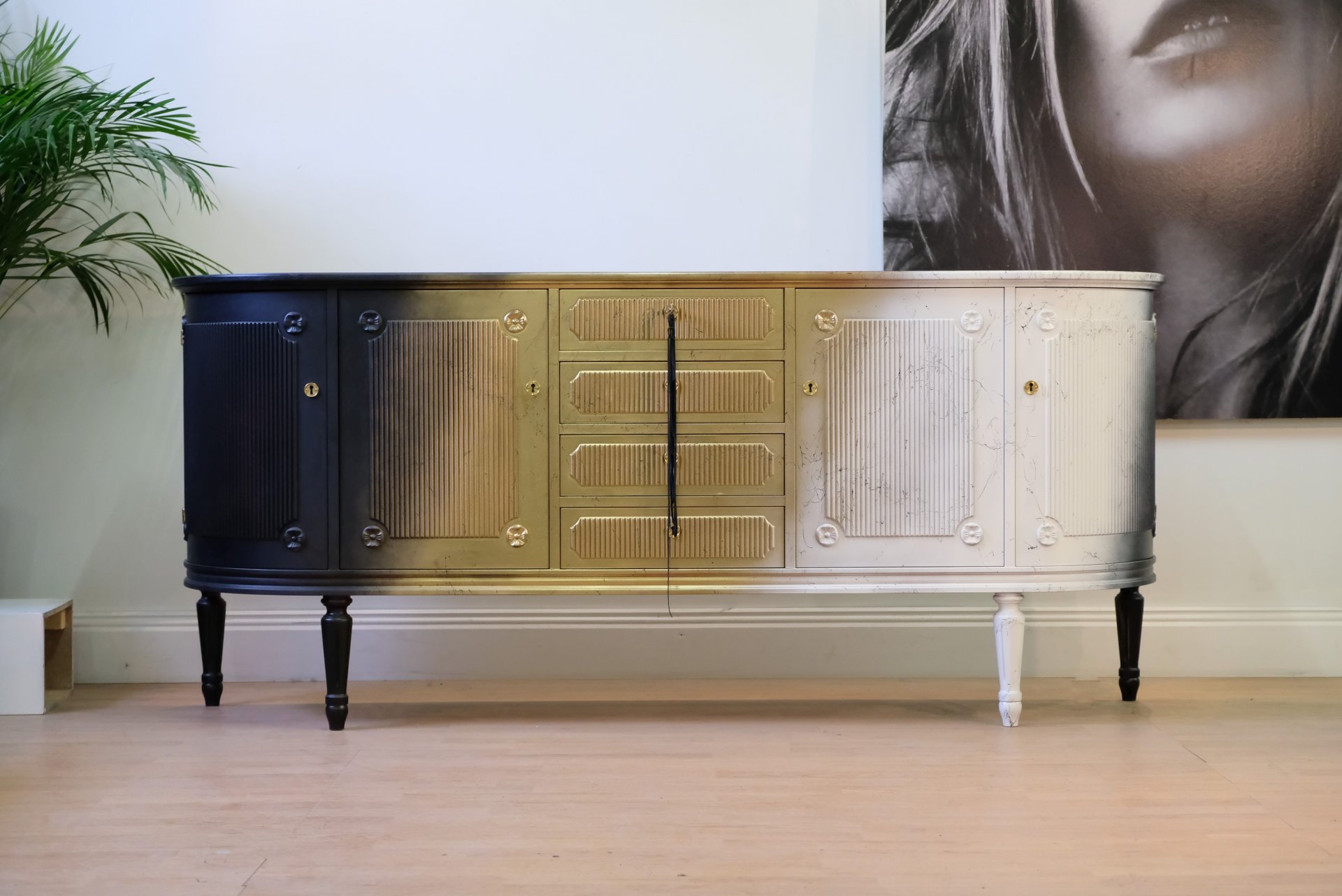
Scandinavian Sideboard – Swedish or Danish, and How It Looks Today
Scandinavian sideboard: differences between Swedish and Danish design, periods, woods and the effect in a home today.


A Scandinavian sideboard stands for clean lines, good craftsmanship and a restraint that makes a room feel calmer. What many people do not realise is that, in furniture, “Scandinavian” means two quite different worlds, the Swedish and the Danish. This article shows the differences, places the periods and woods in context and explains how an old sideboard from the north looks in a home today. You will find the overview of all types in the sideboard buying guide.
Swedish or Danish: the main differences
Danish design of the 1950s and 1960s is better known internationally and is associated with teak, curved edges and slim legs. Swedish furniture is often calmer in expression and more frequently painted or finished with painted decoration; its roots run from the Gustavian style of the late 18th century through the Swedish Grace of the 1920s to the Swedish Modern of the 1930s and 1940s. A detailed comparison is offered by the article Swedish or Danish furniture?.
| Swedish | Danish | |
|---|---|---|
| Typical wood | Pine, birch, mahogany, teak | Teak, oak, rosewood |
| Finish | often painted | mostly oiled or natural |
| Periods | Gustavian, Swedish Grace, Swedish Modern | mainly mid century of the 1950s and 1960s |
| Effect | calm, classic, planar | organic, light, open |
The attribution is a tendency, not a rule: a great deal of teak was also worked in Sweden, and there were painted pieces in Denmark. Anyone buying a piece should therefore ask about construction, wood and dating, and not rely on the stated origin alone.
The Swedish line: Gustavian, Swedish Grace, Swedish Modern
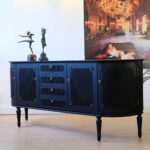
The Gustavian sideboard is built straight and symmetrical, with plain fittings and well-proportioned fronts. In the 20th century the form continued to be made, in factories as well as small workshops. An example from our range is the Gustavian sideboard in matt black with new brass fittings made by hand in Småland. It is 185 cm wide, 81 cm high and 44 cm deep and costs €2,400. The period that followed, Swedish Grace and Swedish Modern, is more restrained and more modern. We describe it in What is Swedish Grace?. You can read more about the origins of the country style under Scandinavian country style.
The Danish line and Swedish mid century
Teak dominates Danish mid century. The wood is dense, oily and easy to work; teak sideboards usually have sliding doors, narrow legs and a calm grain. High-quality furniture design was also produced in Sweden in these years, for example at Svenska Möbelfabrikerna Bodafors. We have restored a teak sideboard from around 1960, painted it black and given it crisp gold frames around the doors and sides: 152 cm wide, 106 cm high, 43 cm deep, on brass feet. It has been sold; a similar piece can be sourced to order. For the period as a whole, read Mid century sideboard and Mid-century furniture.
How a Scandinavian sideboard looks today
A Scandinavian sideboard is rarely mere scenery; it is a working piece of furniture. It carries a lamp, books and ceramics, holds tableware or games and gives order to the room. Three things decide the effect:
- The colour. Natural wood suits pale walls and wooden floors. Matt black gives the piece weight and lets the form speak; it also copes with strong wall colours.
- The fittings. Brass looks warm; leather and seagrass bring texture. A sideboard in only one material looks more severe.
- The feet. Slim legs make the piece light. A plinth or closed base looks calmer and heavier.
A Scandinavian piece painted black is now a deliberate choice: it keeps the original character of the form and gives it a contemporary finish. How black behaves depending on the level of sheen is described in the article Black sideboard. You will find background on the relationship between old and new in Scandinavian furniture under Scandinavian vintage furniture.
Dimensions: what Scandinavian sideboards bring
Scandinavian sideboards are usually shallower than German dressers. Typical dimensions are 40 to 50 cm deep, 70 to 90 cm high and 140 to 200 cm wide. Our pieces fall within this range: the Art Deco sideboard from around 1930 measures 142 × 81 × 48 cm, the large Gustavian sideboard with drinks cabinet 200 × 82 × 50 cm. The shallow depth is an advantage in hallways and narrow living rooms, because the piece offers storage without narrowing the way through. Before buying, measure the wall width, the door swing and the height of the windowsill so that nothing is obscured. How height and placement work together in the living room is explained in the article Living room sideboard.
Genuine or reproduction: how to recognise originals
- Solid wood or real veneer on the fronts, not printed plastic.
- Drawers with wooden runners and dovetailed corners instead of metal runners and stapled bases.
- Fittings in solid brass or wood that are consistent with the age.
- A back panel that is recessed or neatly screwed in place.
- Signs of use that fit the period: softened edges, patinated insides.
You will also find pointers on dating in the article Vintage and retro sideboards. If you are unsure, a photo of the back panel and the inside of the drawer helps.
How to buy from us
Plan B Design is a Swedish workshop. Every sideboard in the Sideboards category is a restored, one-of-a-kind piece; prices range from €1,400 to €2,400. You enquire without obligation, we clarify dimensions, condition and delivery, payment is by arrangement, and delivery within Germany is free. You can get in touch via the contact page, and the terms are set out under Right of withdrawal and returns. A good example of an available form is the Art Deco sideboard from around 1930 (142 × 81 × 48 cm, €2,050).
Frequently asked questions
Is a Scandinavian sideboard always made of teak?
No. Teak characterises Danish mid century. Swedish sideboards are also built from pine, birch or mahogany and are often painted.
How do I recognise a Swedish sideboard?
A reliable attribution needs proof of provenance or maker’s marks. Typical features are calm proportions, painted surfaces and Gustavian or Swedish Grace forms.
Does a black Scandinavian sideboard suit a modern home?
Yes. Matt black is neutral, hides signs of use and can be combined with both pale and dark walls.