
Black Chest of Drawers – Black, Black and Gold, and Black and White


White chests of drawers are the most searched for, but black ones are the pieces we like best and the ones that sell most often. The difference says something about how colour works on a piece of furniture: white is what people think they want, black is what turns out well. This article is about the black chest of drawers in all its variations: off-black, black with gold or brass, and black and white. You will learn what black does to a room and to the piece itself, which sheen suits which piece, and how we lacquer old chests of drawers black so that the finish lasts. For an overview of all chests of drawers, see the chest of drawers guide.
Black: let the form speak
Black is our signature, and the reason is simple: black removes the time stamp and leaves the form. A Rococo chest of drawers in pearl grey with floral painting belongs to the 18th century; the same chest in matt black with brass is a design object that suits any room. Carvings and mouldings gain shadow and sharpness in a single dark colour, signs of wear are barely visible, and black ties the piece in with modern interiors with oak floors and pale walls. Choose a satin-matt finish for classical forms and high gloss for Art Deco; you will find more in Art Deco furniture. To see how we work with black on other pieces, read the article black drinks cabinet.
Off-black: the softer black
A deep off-black, a black with a hint of brown or green, looks softer than pure black. Pure coal black can look harsh in daylight. For most rooms we recommend a satin-matt off-black. One example is the off-black chest of drawers in the Rococo style (€1,100): the curved front comes into its own in a single dark colour.
Black with gold or brass
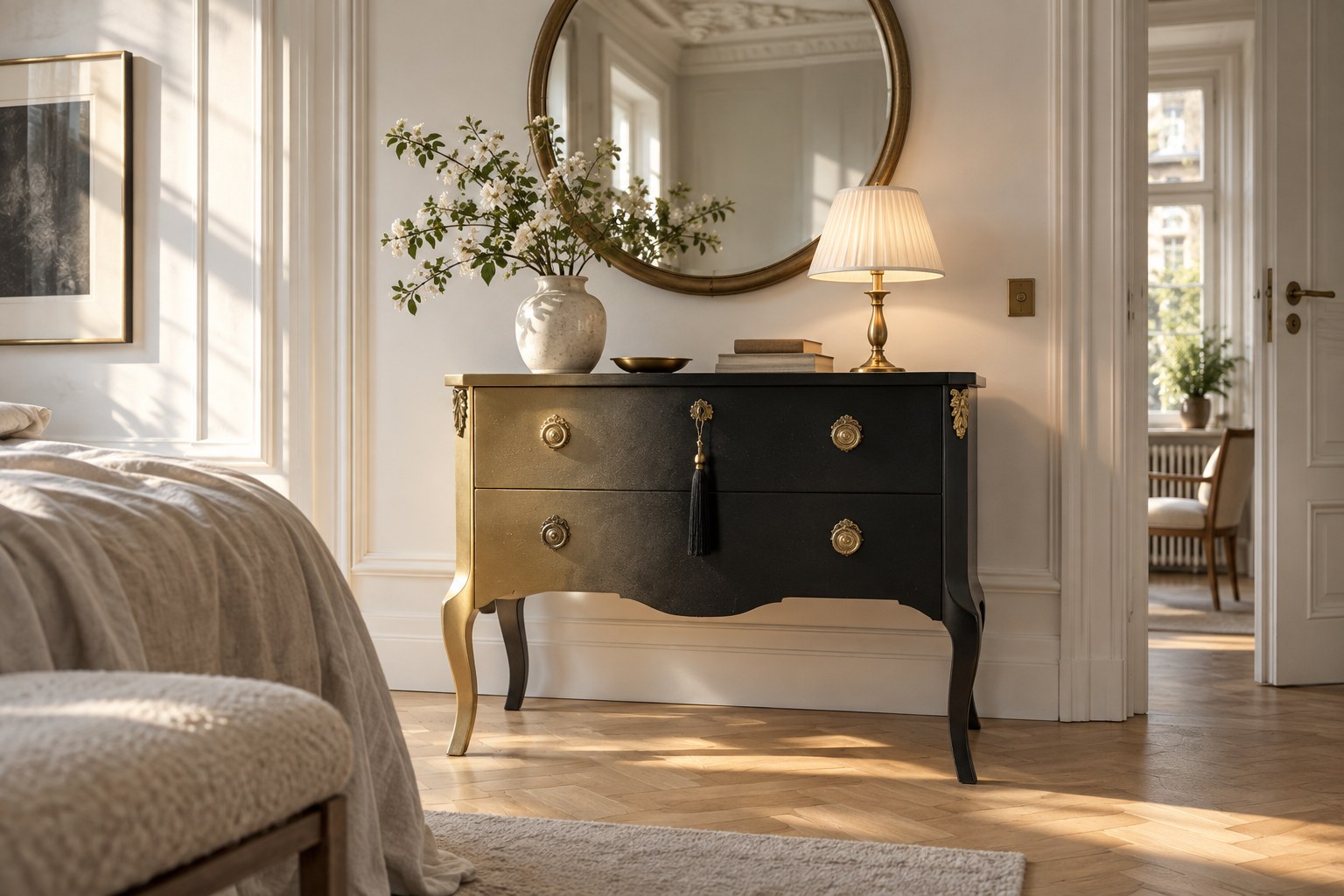
Black and gold is the classic combination for anyone who wants a piece with presence. Gold or brass on fittings, edges and mouldings adds accents without overloading the piece. It suits Gustavian and Rococo forms, in which mouldings and carvings are emphasised anyway. Brass fittings develop a patina from handling over time, which is an advantage. An example from our current stock is the black and white chest of drawers with gold in the Gustavian Haupt style (€980). Read more about the period in Gustavian chests of drawers.
Black and white: contour and light
Two colours on one piece combine the light of white with the contour of black. The rule we work by: the dark colour takes the form, that is the legs and frame, and the pale colour takes the surfaces. The other way round, the piece becomes top-heavy. This applies to chests of drawers as much as to our bedside tables; see black and white bedside tables.
Which rooms suit a black chest of drawers?
- White walls, oak floor: black or dark green. White disappears, brown becomes heavy.
- Dark walls: black for a tone-on-tone look, with brass as the only shine.
- Coloured walls in green or blue: black or wood. Grey looks dirty next to colour.
- Hallway: always dark; see narrow chest of drawers for the hallway.
- Bedroom: black against a dark wall gives a calm tone-on-tone effect; see chest of drawers in the bedroom.
How we lacquer a chest of drawers black
A finish that lasts takes more than two strokes of a brush. We sand off the old finish, repair veneer and cracks, prime, sand between coats and spray-lacquer in several thin layers. The fittings are removed and restored separately, and the drawers are given new runners if they stick. The result is a hard, even finish that withstands a damp cloth and ten years of use. How a redesign proceeds step by step is described in the process of a redesigned piece of furniture. You will find all current chests of drawers in the category Chests of drawers and bedside tables; further colours are covered in white, blue and colourful chests of drawers.
Styling a black chest of drawers
A black chest of drawers goes with almost anything, but some combinations work particularly well. A mirror with a gold frame above it picks up the gold of the fittings. A pale lamp or vase on the top adds contrast. Natural materials such as linen, rattan and pale wood take the severity out of black. Do not hang a picture that is too small above a black chest of drawers; a large format or a group of pictures gives the piece weight. How a single statement piece shapes a room is explained in furnishing with statement pieces.
Caring for a black chest of drawers
Satin-matt lacquer can be cleaned with a soft, slightly damp cloth; harsh cleaners and abrasives attack the finish. Do not place hot objects directly on the top, and avoid constant sunlight, which can change the sheen. Brass fittings may develop a patina; if you prefer them shiny, polish them occasionally with a soft cloth.
Frequently asked questions
Which black should I choose?
Satin-matt off-black for most rooms, high gloss only for Art Deco or very bright rooms. Pure coal black looks harsh in daylight.
Does a black chest of drawers show dust?
More visibly than a mid-grey one, yes, especially in high gloss. Satin-matt lacquer is more forgiving and can be wiped with a slightly damp cloth.
Does repainting reduce the value of an old chest of drawers?
For a signed original with an intact finish, yes. For an anonymous chest of drawers with a worn finish or one that has already been painted over, no; usually the opposite. We assess every piece before we lacquer.