
Art Deco Furniture: Hallmarks, the Scandinavian Variant and Furnishing Without a Stage Set



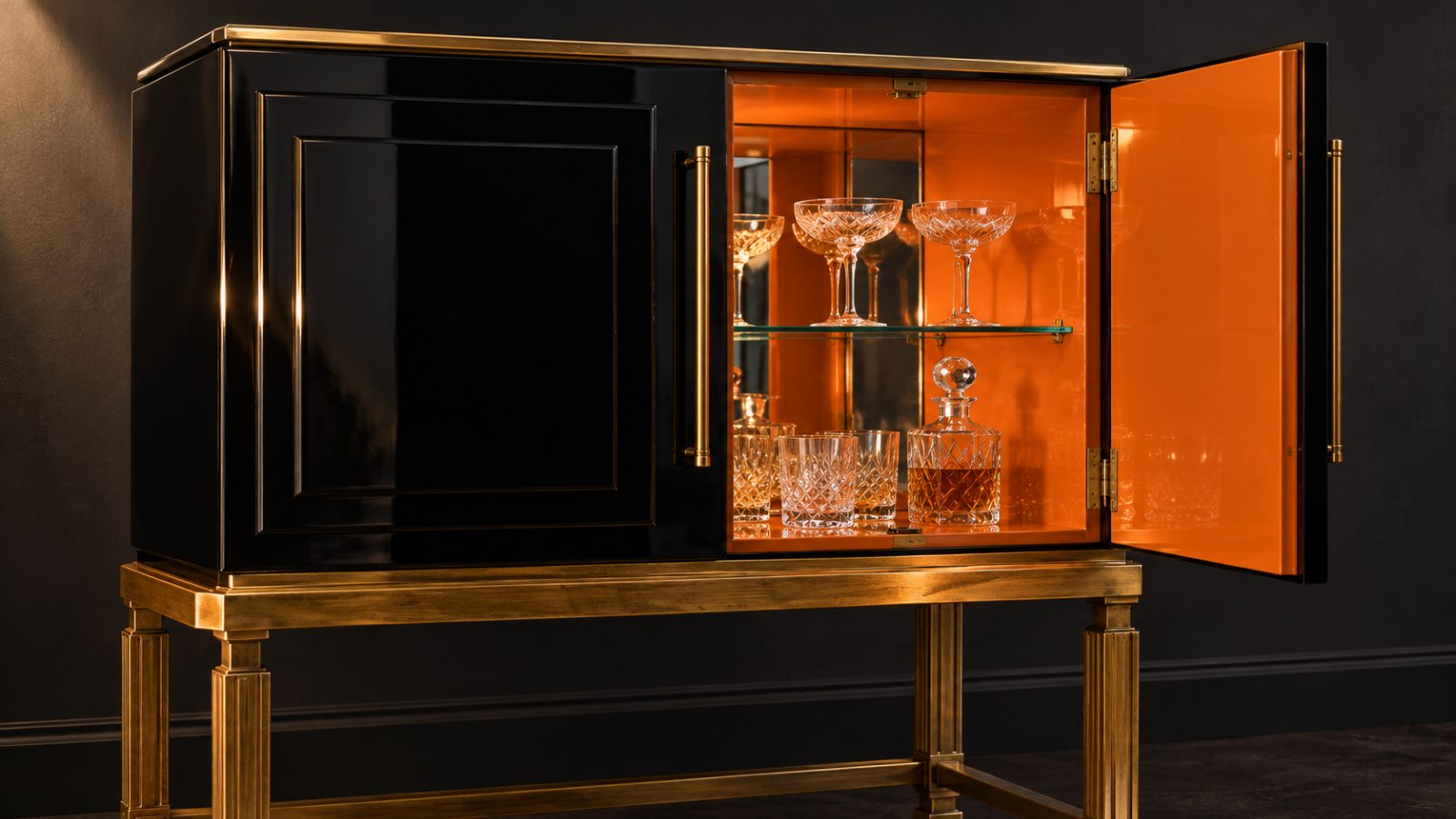
Art Deco furniture is the stage among vintage furniture: curved fronts, high gloss, brass, mirrored glass and an unselfconscious opulence. Hardly any era is searched for so often and confused so often. In this article we explain what defines Art Deco, how the Scandinavian variant differs from the French, which types of furniture are typical and how a single Art Deco piece can shape a room without turning it into a stage set. You will find the place of this style among the others in the guide Scandinavian vintage furniture.
What is Art Deco?
The name comes from the Paris exhibition of 1925, the Exposition internationale des arts décoratifs et industriels modernes. Art Deco is the decorative modernism between the wars: inspired by Cubism, by Egypt after the discovery of Tutankhamun’s tomb in 1922, by jazz, ocean liners and skyscrapers. The furniture is geometric, glossy and made of precious materials. In Scandinavia a calmer variant arose in parallel, later called Swedish Grace. You will find the direct comparison of the two styles in the article Swedish Grace vs. Art Deco.
Hallmarks of Art Deco furniture
- Geometry: stepped forms, fans, zigzags, circles, straight bands. The shapes are sharp and repeated.
- Gloss: high-gloss lacquer, polished veneer, mirrored glass, chrome and nickel-plated metal.
- Exotic materials: Macassar ebony, rosewood, burr walnut, tortoiseshell, parchment, leather.
- Curved fronts on chests of drawers and sideboards, often on a solid plinth rather than on legs.
- Contrast: black against gold, dark wood against pale marquetry, matt against glossy.
Scandinavian Art Deco: more matter-of-fact, lighter, rarer
French Art Deco furniture by Ruhlmann or Leleu consists of works of art with prices to match. German Art Deco furniture is heavier and darker, often in walnut. Swedish pieces of the 1920s and 1930s take up the curved fronts and the gloss, but remain restrained in scale and material: birch and mahogany instead of Macassar, fine marquetry instead of chrome. They are scarcely represented on the German market, because Sweden exported little at the time, and that is precisely what makes them interesting. Two examples from our workshop: the black patterned Art Deco sideboard, circa 1930 and the graphic black and white sideboard, circa 1930.
The types of furniture: drinks cabinet, sideboard, chest of drawers
The drinks cabinet is the Art Deco piece par excellence, since cocktail culture and the style arose at the same time. Everything about it in the article Art Deco drinks cabinet and in the big drinks cabinet guide. The sideboard with a curved front and plinth is described in the article Art Deco sideboard, with all pieces under Sideboards. The chest of drawers with rounded corners and handleless drawers is under Chests of drawers and bedside tables. Then there are club armchairs in leather, round side tables with mirrored tops and tall display cabinets with faceted glass.
Furnishing with Art Deco without it becoming a stage set
Art Deco cannot take an overdose. A room full of Art Deco furniture becomes a hotel foyer. What works is one or two strong pieces in an otherwise calm interior: a black drinks cabinet with gold leaf in front of a warm wall, a curved sideboard beneath a large picture, a club armchair by the window. Keep floor and textiles plain, repeat one metal through the room, and do not mix Art Deco with Rococo in the same room, as the two decorative styles compete. How a piece of furniture carries a room is described in the article Furnishing with statement pieces.
How we restore and redesign Art Deco furniture
Art Deco furniture from the 1920s and 1930s almost always has good construction and a tired surface: cracked polish, faded veneer, oxidised fittings. We sand back, fill in veneer, refurbish or replace fittings and give the piece a new surface that reinforces its character, mostly black with gold leaf, brass or a hand-painted pattern. The form is already dramatic, so the surface can be simple. The process is described in the article The process behind a redesigned piece of furniture.
Frequently asked questions
Which colours belong to Art Deco?
Black, gold, chrome and silver as a base, with accents in deep green, burgundy, mustard yellow and ivory. Pastel shades occurred mainly in textiles.
Is Art Deco furniture expensive?
Signed French pieces fetch six-figure sums. Anonymous Swedish and German serially produced furniture of the same period is affordable: restored and redesigned, it generally costs €1,200 to €3,850 with us, including delivery within Germany.
Does Art Deco suit a modern flat?
Yes, as a contrast. An Art Deco piece against white walls and an oak floor becomes a jewel. Two or three in the same room become a stage set.