

Antique Display Cabinet: Periods, Prices and What to Check Before Buying
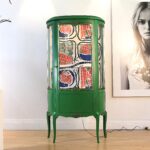

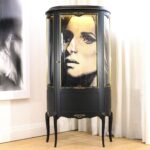
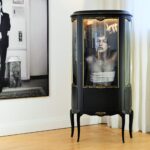
An antique display cabinet is practically the only right choice when the room otherwise has older furniture, and often the best one in a modern room too, because the form carries and the construction lasts. But old display cabinets are also the pieces where most purchases go wrong: the glass cracks in transport, the doors hang, the back panel is split and beading is missing. This article explains the periods, what an antique, old or second-hand display cabinet costs and exactly what to look for before buying. It is part of our large guide to the display cabinet.
The periods: how to recognise them
Gustavian, 1780 to 1810. Straight form, glazing-bar doors with small panes, fluted corner posts, finished in pearl grey or white. Genuine Gustavian display cabinets are rare and cost from around €4,000. Almost everything sold as Gustavian is a 20th-century reproduction in the same form, and those are the ones we prefer. The style is described under Scandinavian country style. Rococo, 1750 to 1775, and Neo-Rococo, 1880 to 1910. Curved legs, an undulating front and a carved crest. Originals are museum pieces. Neo-Rococo of the turn of the century is widespread and becomes dramatic in black lacquer, like the Rococo display cabinet with matching chest of drawers. Louis XVI, in Sweden 1900 to 1940. The French model for the Gustavian, with curved glass, brass beading and carved garlands. The most common form among our display cabinets, such as the Louis XVI display cabinet with brass details, antique. Turn of the century and Art Nouveau, 1890 to 1915. Oak or mahogany, heavy, often with coloured glass in the upper doors. Swedish Grace and the 1930s to 1940s. Birch or mahogany, smooth form, glass without glazing bars, see What is Swedish Grace?. The 1950s. Teak, splayed legs, sliding glass doors. They should remain wood and not be painted, see Wooden display cabinet.
Antique, old, vintage or second-hand
The terms mean different things and are priced differently. Antique formally means over 100 years old, in practice before 1920, and costs the most. Old says nothing about age, only about style, and is used for everything from the 18th century to the 1950s. Vintage means the 1930s to 1970s. Anyone searching for a vintage display cabinet will often find furniture from this period. Second-hand is anything someone else has owned, and the cheapest search term. Anyone who wants an old cabinet at a good price searches for a second-hand or old display cabinet rather than an antique one: the cabinets are often the same. Old cabinets also work particularly well in country style, where display cabinets are traditionally at home.
What it costs
At auctions and on the second-hand market, an unrestored display cabinet from 1900 to 1950 costs between €100 and €600, a turn-of-the-century oak cabinet €200 to €800, a genuine Gustavian one from €4,000. To that you add transport, €100 to €300 for a cabinet with glass that must be driven upright. Then the restoration: new finish €500 to €1,100, new back panel €150 to €400, new glass shelves €50 to €150, repair of glass or glazing bars €100 to €500. A restored and redesigned display cabinet from us costs €1,200 to €2,300, ready to go, and is usually less expensive than buying and restoring one yourself once you count your own time. You will find all current pieces in the Display cabinets category. The arguments for and against restoring instead of buying new are set out in Why restore instead of buying new.
Check before you buy: seven points
- The glass. Old glass is thin, often 2 to 3 mm, and sometimes faceted. Cracks in the corners are visible only in raking light. Replacing curved glass costs €200 to €500, straight glass €30 to €80.
- The doors. Open and close them. If a door hangs, the hinges are worn or the carcass is warped. The first can be fixed, the second rarely.
- The back panel. Look into the cabinet from the side. Split, wavy or replaced with hardboard is common and means it must be renewed. That is a reason to buy cheaply, not a reason to pass.
- The shelves. Glass shelves are often missing from old cabinets. Wooden pegs or brass supports show where they sat. New shelves are inexpensive; fixed wooden frames are not.
- The veneer. Bubbles and loose veneer can be repaired; missing veneer on a curved part only at great effort.
- Beading and crest. Missing beading shows as light stripes. Crests on Gustavian and Louis XVI cabinets are often loose parts that have been lost. Without a crest the cabinet looks cut off.
- Smell. Mould and smoke sit in the wood and do not go away with lacquer. Smell inside the drawer.
What we do with an antique display cabinet
We leave the construction untouched: carcass, doors, glass and fittings make the cabinet. The finish is redone, in lacquer or with new polish, and the interior covered with fabric or photographic art, the only change that is reversible and yet alters everything. We add new glass shelves with a ground edge and lighting where desired. A signed piece, a Gustavian original or a cabinet in untouched condition we leave as it is. This is described in The difference between restoration and redesign.
Frequently asked questions
Is it worth restoring an old display cabinet?
Yes, if the carcass is straight and the glass intact. Back panel, beading, shelves and finish are inexpensive in proportion, compared with a new cabinet of the same quality.
How do you transport an antique display cabinet?
Upright, with the doors closed or tied, the glass shelves removed and the glass protected with cardboard. Never lying down: the glass cracks from the twisting.
Does black lacquer destroy the value of an antique cabinet?
With museum-quality originals, yes. With 20th-century Louis XVI and Gustavian reproductions, no; on the contrary, a redesigned cabinet sells for more than a tired original.