

Wooden Display Cabinet: Oak, Walnut, Mahogany, Birch and What the Wood Reveals
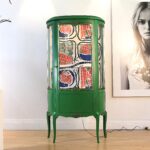
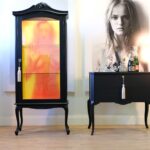
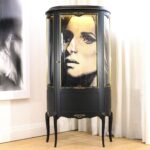
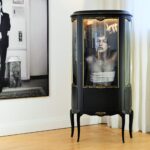
A wooden display cabinet is a cabinet in which the type of wood is the whole point: veneer in birch, mahogany, oak or walnut that stays visible and carries the look. It is the warmest choice, suited to rooms with other wooden furniture, and the most difficult, because the wrong wood in the wrong room looks like a piece of furniture on a visit. This article goes through the woods, explains what they reveal about age, how dark and light wood behave in a room and when a wooden cabinet should remain wood. It is part of our large guide to the display cabinet.
The woods and their periods
Birch is the wood of Swedish design of the 1920s to 1940s: light, golden, often flamed or as burr birch with a gnarled figure. A birch display cabinet is almost always Swedish and almost always Swedish Grace or Functionalism, see Swedish Grace furniture. Mahogany is the nobler wood of the period from 1900 to 1930: red-brown, dense, with a sheen. Louis XVI and Empire display cabinets are of mahogany. Oak is the wood of the turn of the century and of Art Nouveau, heavy and coarsely grained, and later of the 1950s, when light and white-limed oak became fashionable. Oak display cabinets from 1900 to 1915 are large and dark, those of the 1950s light and slight. Walnut is the luxury wood of the 1930s and the continental one of the 1950s: dark, richly grained, often in book-matched veneer. Teak is Danish and Swedish, 1950s to 1960s. Pine is the wood of country furniture and of the 1970s, rare in display cabinets before 1970, and a pine cabinet with glazed doors is usually younger than it looks.
Dark or light wood in the room
The rule is simple: a wooden display cabinet should have the same tone as the largest wooden surface in the room, usually the floor. Dark wood, mahogany or walnut, against a light oak floor is a contrast that works if the cabinet is the only dark piece; two dark pieces in a light room look like a waiting room. A cabinet of light wood, birch or light oak, against a light floor disappears and needs a dark wall or a dark interior to become visible. A display cabinet of dark oak and dark brown looks best in rooms with a dark floor or a lot of textiles. If you already own a piece of 1940s birch furniture, a birch display cabinet is the only thing that looks deliberate. Mixed woods in the same room work if they share the same tone: birch and light oak, mahogany and walnut. Birch and mahogany side by side do not.
When wood should remain wood
We lacquer many display cabinets black, but not all of them. Three cases in which the wood should stay: burr birch and flamed birch, where the figure is the whole point; walnut and mahogany in book-matched veneer, where the grain runs mirrored across the doors, a craft that cannot be imitated; teak and oak of the 1950s, whose form is so severe that it needs the warmth of the wood. Cases in which the wood need not be preserved: oak of the turn of the century with a heavy dark stain, pine, and cabinets whose veneer is already damaged or replaced. We prefer to redesign those, see Black display cabinet and the colour guide.
How we restore a wooden display cabinet
A wooden display cabinet is restored with shellac polish or oil, not with lacquer. Old polish is dissolved, the surface cleaned and built up again in thin layers. This produces the deep sheen that mahogany and birch veneer had when new. Bubbles in the veneer are warmed and reglued, missing pieces replaced with veneer of the same wood in the same direction. We often cover the back panel with fabric, even on a wooden cabinet: a dark fabric behind birch brings out the wood, a patterned one behind mahogany turns the cabinet into a jewellery box. We replace the glass shelves with new ones with a ground edge, and the light goes where the wood can reflect it, see Display cabinet with lighting.
Oak display cabinet: the most common search term and the most difficult choice
Oak display cabinets are searched for more often than any other wood, and they are two entirely different pieces of furniture. The oak display cabinet of the turn of the century is 190 cm tall, stained dark, with carved beading and coloured glass. It suits the period apartment and hardly anywhere else. The oak display cabinet of the 1950s and 1960s is 120 to 160 cm tall, light or white-limed, on slender legs. It suits the modern home and is what most people are looking for. New display cabinets with a real-wood look, limed or white-pigmented oak, are usually made of coated chipboard with oak veneer and cost €350 to €900. A restored old oak cabinet costs €1,100 to €2,000 with us, but it is solid. You will find all current pieces in the Display cabinets category, and what to look for in an old cabinet is explained in Antique display cabinet.
Frequently asked questions
Which wood is the most common in old Swedish display cabinets?
Birch, followed by mahogany. Oak is most common in cabinets from 1900 to 1915 and from the 1950s onwards.
Can a wooden display cabinet stand in a room with white furniture?
Yes, as the only wooden piece. A cabinet of dark wood against white is a classic combination. Light birch against white needs a dark interior so that the cabinet stays visible.
Should a wooden display cabinet be oiled or lacquered?
Polish or oil for veneer from before 1950, oil or wax for teak and oak of the 1950s. Lacquer only if the cabinet is to be painted.