
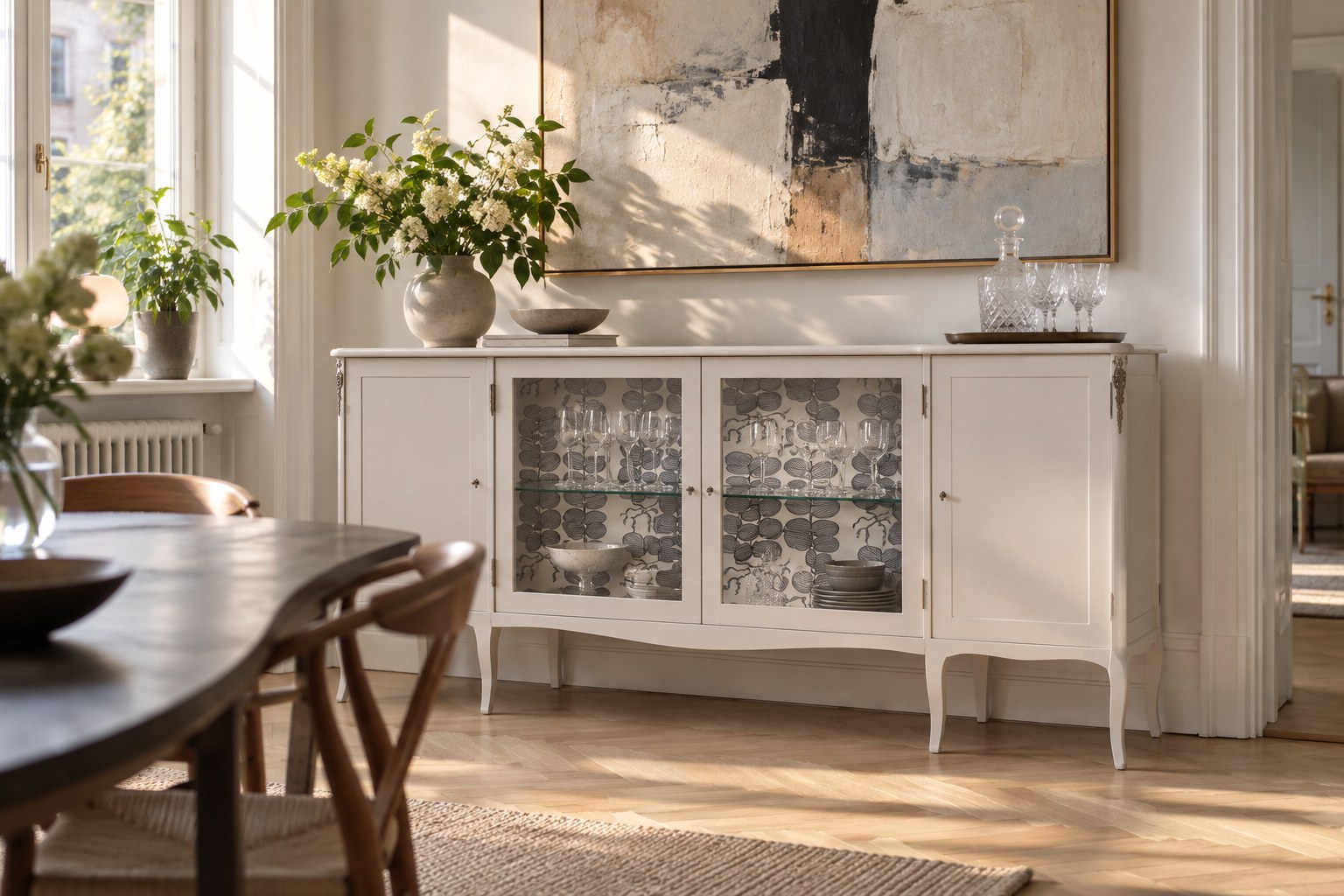
Display Chest of Drawers: The Low Display Cabinet That Shows What It Holds


A low display cabinet is a sideboard with glazed doors, and it solves two things at once: a surface at a comfortable height and a display beneath it. It is the piece for the wall under a large picture, under a window or in the dining room, where the porcelain should stand close to the table. This article explains the heights, the difference between a chest of drawers with display section and a low display cabinet, placement and which old models are best. It is part of our large guide to the display cabinet.
The height: 80, 90 or 110 cm
A low display cabinet is between 75 and 115 cm tall. Under 85 cm it has sideboard height and serves as a serving surface at the dining table. 90 to 100 cm is the height for a cabinet under a window with a normal sill height. 105 to 115 cm is the low display cabinet in the classic sense, with glazed doors from waist height and a top that you look down on. The rule for placement under a picture or window: the top of the cabinet should be at least 20 cm below the windowsill or the lower edge of the picture. The depth of old sideboards is 40 to 50 cm, somewhat more than tall display cabinets, because the sideboard was built for plates and tureens.
Chest of drawers with display section, sideboard with glazed doors or low display cabinet
The terms describe the same piece of furniture from different angles. A display chest of drawers or sideboard with display section, often from the 1930s to 1950s, has glazed doors in part of the front, the rest being closed doors or drawers. A sideboard with glazed doors has glass across the whole front but keeps the height and depth of the sideboard. A low display cabinet is a display cabinet built low, usually with glass on three sides and a plinth. All work in the room in the same way; the difference lies in how much is shown and how much concealed. Our experience: one third glass and two thirds closed is the combination most people live with best day to day, because it shows the beautiful and hides the rest. We describe sideboards without glass under Art Deco sideboard, and you will also find matching pieces with drawers under Chests of drawers and bedside tables.
Placement: where the low display cabinet beats the tall one
Under the window: the only display cabinet that has room there, and the daylight from above makes the contents glow without lighting. Under a large picture: a low display cabinet carries a picture 100 to 150 cm wide so that the two form a unit, whereas a tall cabinet competes with the picture. In the dining room: the serving cabinet, with glasses and jugs in the display section and tablecloths in the drawers. In the living room opposite the sofa: as a lowboard with display section, where the screen stands on the top and what would otherwise be seen behind glass, books and audio equipment, becomes part of the piece rather than a shelf beside it. In the hallway: a ceiling too low for a tall cabinet, but room for a low display cabinet 30 to 40 cm deep that takes the keys in the drawer.
Old low display cabinets: what exists
The best low display cabinets are Swedish sideboards of the 1930s and 1940s in birch or mahogany, with two glazed doors in the middle and closed doors at the sides. They are built to carry heavy loads, have solid drawers on wooden runners and often a top of veneer with book-matched grain. Louis XVI sideboards with display section from the 1920s are more elegant, with fluted legs and brass beading, but shallower. Low Gustavian cabinets are rare and expensive, see Gustavian chests of drawers. Swedish Grace sideboards of the 1920s with marquetry and curved glass are the most sought after and the ones we most like to work with, see What is Swedish Grace?. A current example of a display cabinet with matching chest of drawers is the black Rococo display cabinet with matching chest of drawers. You will find all current sideboards and display cabinets in the Sideboards and Display cabinets categories.
How we redesign a low display cabinet
A low cabinet is seen from above more than a tall one: the top is the surface you look at every day. That is why we put the most work into it, in lacquer, in veneer or with a loose marble slab that turns the cabinet into a serving surface that withstands glass and heat. We cover the inside of the display section with fabric or paint it in the colour of the exterior, see Black display cabinet, and we replace the glass shelves with new ones of clear glass with a ground edge. Lighting in a low cabinet is an LED strip on the front edge under the top, shining down through the glass, see Display cabinet with lighting. We choose the colour according to what stands on it: a black low cabinet under a strongly coloured picture, a grey-green one under a window with plants, see the colour guide.
Price
New low display cabinets and sideboards with glass cost €350 to €1,100 and are almost always made of coated chipboard with thin glazed doors. Old sideboards with display section cost €150 to €500 at auction, are solid and heavy, and usually need a new finish and new glass shelves. Restored and redesigned, they cost €1,200 to €2,400 with us. The difference from buying new: the old cabinet is built to carry porcelain for a hundred years, see Why restore instead of buying new.
Frequently asked questions
How tall may a low display cabinet be under a window?
The top at least 20 cm below the windowsill. With a sill height of 90 cm that is at most 70 cm, in practice a low sideboard.
Can a television stand on a low display cabinet?
Yes, if the top is at least 45 cm deep and the cabinet stands firmly. The glass shelves beneath do not tolerate wobbling, so adjust the feet.
What is the difference between a sideboard and a dresser?
In practice, none. Anrichte is the older German word, sideboard the English one, which became usual with mid-century furniture.