

Black Display Cabinet: Why Black Works Best Behind Glass
Black is the colour in which we lacquer most of our display cabinets, and that is not a trend but a matter of optics. Glass reflects light, and what stands behind it is seen best against a dark background: porcelain, crystal, brass and books gain contours against black that they lose against white or wood. A black display cabinet therefore looks full and orderly with half the objects. This article explains how to choose the right black, which old cabinets turn out best and what to look for in the interior. It is part of our large guide to the display cabinet.
Matt, satin or gloss
Glossy black lacquer is the look of the 1930s and of Art Deco. It mirrors the room, forgives nothing and demands a perfect surface underneath, which is why high-gloss cabinets are more labour-intensive. On a display cabinet with a lot of glass, high gloss can create too many reflections. We mostly use it on Rococo and Louis XVI pieces, where the curved forms come alive through the reflections, as with the black Rococo display cabinet with matching chest of drawers. Satin is the most common treatment: deep black without reflection, easy to care for and suited to most Gustavian and Louis XVI cabinets. Matt is the most modern look, almost velvety, but sensitive to fingerprints around the handles. We recommend matt only where the cabinet is not handled every day, as with the matt black display cabinet in Louis XVI style.
Black on black or a coloured interior
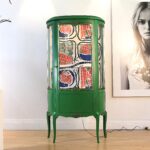
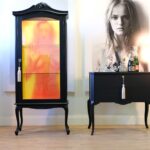
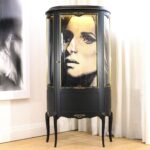
A cabinet in black on black is black outside and inside, including the back panel and the edges of the shelves. It is the most dramatic choice, and every object becomes an exhibit. The drawback: black objects disappear. The more forgiving option is a black cabinet with a coloured or patterned interior. A fabric, a wallpaper or a photograph behind the shelves brightens it, so that light and dark objects both stay visible, as with the black Louis XVI display cabinet with interior motif. We describe how the interior affects the room in Styling a display cabinet.
Which old cabinets turn out best in black
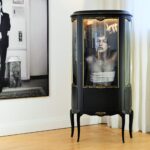
Black lacquer requires that the form carries it. A cabinet with smooth surfaces and thin glazing bars, such as a birch display cabinet of the 1940s, becomes a black block with glass: elegant, but anonymous. A cabinet with moulded beading, fluted legs, a carved crest or a curved front gains deeper shadows from black and becomes a sculpture. That is why Louis XVI, Gustavian and Rococo are the best candidates and the teak display cabinets of the 1950s the worst, because they should remain wood, see Wooden display cabinet. Brass details such as locks, escutcheons and beading should be kept or added: brass against black is the combination that makes a cabinet look luxurious without costing more, as seen on the black display cabinet with brass details. The same principle applies to bar furniture, see Black drinks cabinet.
The black display cabinet in the room
A black display cabinet is the heaviest point in the room and belongs where the eye lands: centrally on the wall you see from the sofa or the dining table. Avoid the corner next to a window, where the glass reflects the daylight and the contents disappear. Against a white wall the cabinet becomes a silhouette; against a dark wall in grey-green, blue or warm grey it becomes part of the wall and only the contents glow, the most refined solution. A floor of light oak or limestone carries a black cabinet best. A large black display cabinet of 190 cm or more needs ceiling height, at least 2.40 m. In rooms with lower ceilings, a low display cabinet in black has just as strong an effect.
Black in wood or in metal
Anyone searching for a display cabinet in black with metal usually means industrial cabinets of steel and glass. They are sold new, cost around €400 to €1,800, are severe and slender, but have no closed base cupboard and quickly feel cold in a living space. An old wooden display cabinet, lacquered black, offers the same graphic look with storage below and a form that will last another hundred years. The price difference is small: our restored black display cabinets usually cost €1,200 to €1,600, finished with a new interior. You will find all current pieces in the Display cabinets category, and we describe old cabinets worth repainting in Antique display cabinet.
Care and everyday use
Black lacquer shows dust and fingerprints more than light surfaces, but with the right care it is uncomplicated. Wipe the surface with a soft, slightly damp microfibre cloth and dry it immediately afterwards. Avoid harsh cleaners and furniture polish containing silicone, as it leaves streaks on lacquer. It is best to clean the glass separately with a lint-free cloth, without letting cleaner run into the joints. Small scratches on the edges of a satin lacquer can be touched up in the workshop without the whole cabinet having to be relacquered. It is also important that the cabinet stands level: adjusting the feet protects the doors and hinges, and the glass panes stay free of tension.
Frequently asked questions
Does a black display cabinet look too dominant in a small room?
Not if it stands against a darker wall and is low or narrow. It is the height, not the colour, that makes a cabinet dominant. See Narrow display cabinet.
Should the inside be black or light?
Black if you are showing light objects, glass and porcelain. Light or patterned if you are mixing dark and light objects.
Can you lacquer my own display cabinet black?
Yes. We also restore and lacquer customers’ furniture. The process is described in The process behind a redesigned piece of furniture.