
A Drinks Cabinet in the Living Room: How to Place It Well


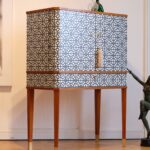


A drinks cabinet in the living room can become the natural centrepiece of the home. Besides practical storage for bottles and glasses, the piece often acts as a striking design feature that sets the tone of the room.
In many homes the drinks cabinet serves both as storage and as the visual anchor of the interior. The right placement lets it sit naturally in the room while giving it the attention it deserves.

Where Should a Drinks Cabinet Stand?
Placement in the living room is mostly a matter of balance. The piece should be easy to reach when in use and at the same time fit in with the rest of the furnishings.
- Against a wall, where the piece gains a clear presence
- Near the seating area, where it is used on sociable occasions
- As a design piece between the living and dining room
- In an open-plan layout, where it creates a natural zone
A well-placed drinks cabinet therefore works as much as a piece for sociable occasions as a decorative element in the room.
The Drinks Cabinet as a Statement Piece
Many people use the drinks cabinet as a so-called statement piece: furniture that gives a room character and personality. Through material, colour or form, it can become one of the most interesting objects in the room.
This is especially true when the piece has a clear design identity, such as retro or Art Deco. Pieces like these often work as well as decorative objects as they do as practical furnishings.
If you would like to read more about how furniture becomes the focal point of a room, see also our guide: Statement furniture: how to furnish around a piece that commands the room.
Connecting the Drinks Cabinet With the Rest of the Furnishings
For the drinks cabinet to feel natural in the living room, it is worth considering how it works with the other furniture. Colours, materials and proportions help to create a harmonious whole.
- Combine woods with other wooden details in the room
- Let metal fittings be echoed in lamps or other details
- Place art or a mirror above the piece
- Work with lighting to highlight the piece
This makes the drinks cabinet an integrated part of the room’s design rather than an isolated piece of furniture.
Old Furniture in Modern Interiors
Many drinks cabinets found in modern homes are older, high-quality pieces that have been given new life through redesign and restoration. The combination of classic materials and modern aesthetics allows them to work in very different settings.
This is also why redesigned furniture has become more and more popular: it keeps the original quality and gains a look that suits today’s living spaces.
You will find examples of drinks cabinets and display cabinets that work in the living room in our current range: Drinks cabinets and display cabinets.
A Home Bar in the Living Room: Five Ideas That Work
- The solitaire. The drinks cabinet on its own against a calm wall, with a picture or mirror above it and a floor lamp beside it. The safest solution and the one we recommend most often.
- The corner by the window. A drinks cabinet on legs, set at an angle in a corner with daylight from the side, becomes a small zone of its own without taking up wall space.
- Behind the sofa. A low drinks cabinet or a sideboard with a bar compartment, used as the back of a free-standing sofa, divides the room in two.
- Next to the bookcase. This works if the drinks cabinet is taller and a different colour from the bookcase, otherwise they merge.
- In the alcove. A narrow alcove by the door will hold a slim, tall drinks cabinet and becomes a natural stopping point when guests come in.
Clearance, Height and Light
Leave at least 60 cm free in front of the cabinet so that the flap or doors can open and someone can stand in front of it. Do not place the cabinet where people squeeze past, as the paintwork will get scratched. The work surface inside should sit 85 to 95 cm high, like a kitchen worktop, otherwise mixing drinks is uncomfortable. The room lighting should come at an angle from above or from the side, never from the front, otherwise the lamp is reflected in the paintwork. Avoid a wall in direct sunlight: it bleaches veneer and paint and warms the spirits. How the cabinet looks against different wall colours is covered in the article Black drinks cabinet.
Combining It With the Other Furniture
A drinks cabinet may be the strongest piece in the room, but only one piece may be. Keep the sideboard lower and calmer and the sofa a single colour, and repeat one material from the cabinet in two places in the room: brass in a lamp, black in a picture frame. How a single standout piece can carry a whole room is described in the article Furnishing with statement furniture, and how a vintage drinks cabinet fits into a contemporary interior in Styling a drinks cabinet in a modern interior.
Frequently Asked Questions
Where does the drinks cabinet go in an open-plan kitchen-living room?
On the living room side, ideally as a boundary between the zones. If it stands by the kitchen, it becomes one kitchen cabinet among others.
Can the drinks cabinet stand against a dark wall?
Yes. If the cabinet is black, the result is an elegant tone-on-tone effect in which only the brass and mirror gleam. A light cabinet against a dark wall, on the other hand, becomes an exclamation mark, which may be exactly what the room needs.
How high should the picture above it hang?
With its lower edge 15 to 25 cm above the top of the cabinet, so that the two read as a unit.