
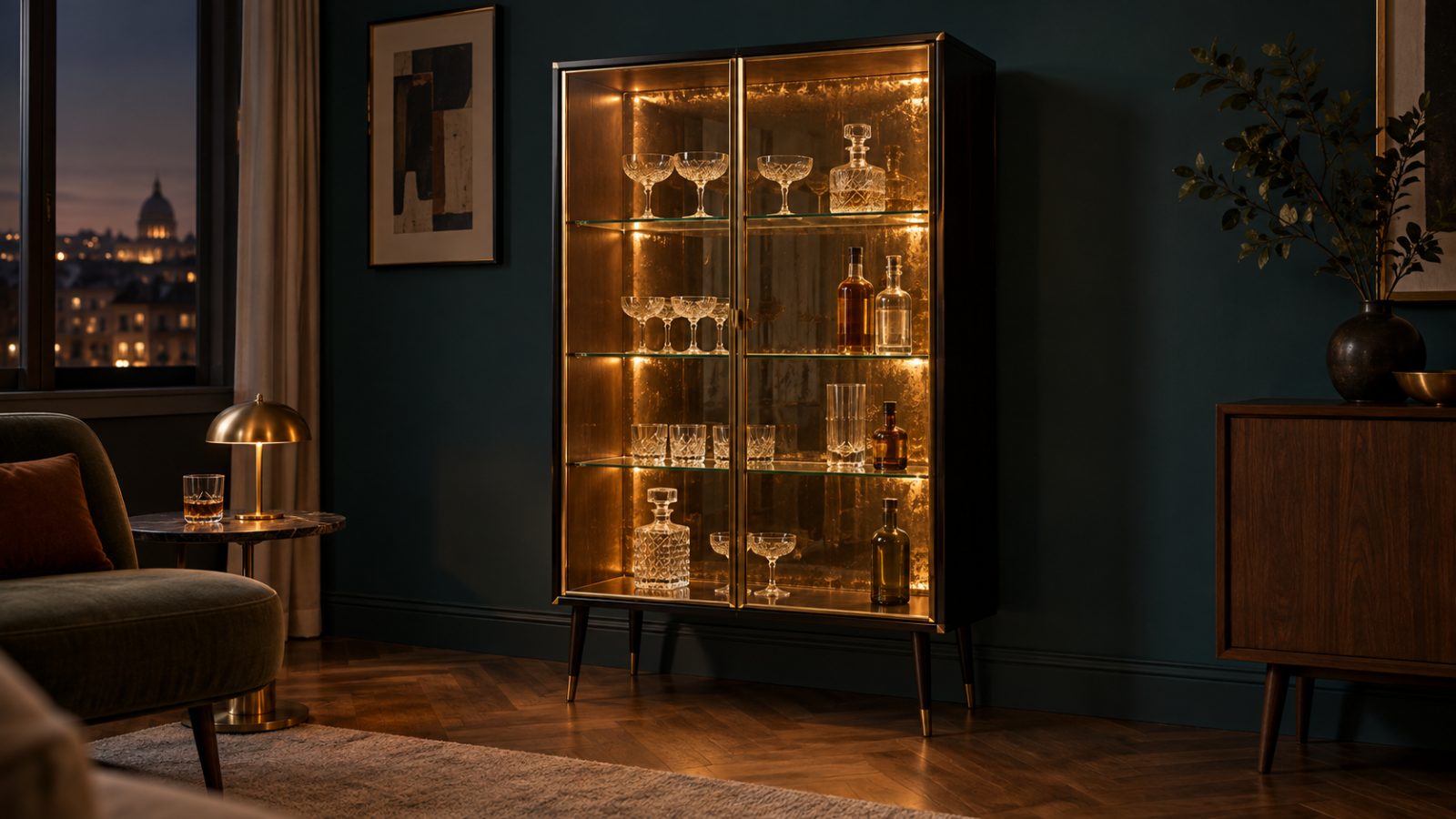
Drinks Cabinet with Glass Display: Glass, Light and the Case Against

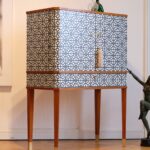
A drinks cabinet with a glass display shows what other drinks cabinets hide: glasses, decanters and bottles behind glass, often lit. That is appealing, but it also has drawbacks, from dust to sunlight that fades the whisky. In this article we compare the drinks cabinet and the glass-fronted bar cabinet, explain which types of glass and lighting make sense, and show when the closed variant is the better choice. You will find all the basics on types and eras in the drinks cabinet guide.
Drinks cabinet, glass-fronted bar cabinet or display cabinet with a bar compartment?
The three terms describe different pieces of furniture, which are often mixed up in the trade:
- Drinks cabinet: closed wooden doors, with the interior visible only when opened. The classic of the 1930s to the 1960s.
- Glass-fronted bar cabinet: glass doors or glass panels in the doors, with the interior permanently visible. Common in Art Deco pieces with faceted glass and in 1950s display cabinets with thin brass frames.
- Display cabinet with a bar compartment: a display cabinet whose lower, closed section is used as a bar, while glass and porcelain are displayed above. Many of our display cabinets can be used in this way.
Which form suits you depends on one question: do you want to show the bar, or stage it? Showing means glass. Staging means closed doors that open when the evening begins.
Glass: faceted, clear, frosted
You will come across three kinds of glass in old drinks cabinets. Faceted glass with bevelled edges breaks up the light and is typical of Art Deco, but it is delicate and expensive to replace. Clear glass, usually 3 to 4 mm, is the standard of the 1950s and 1960s and can be renewed without difficulty. Frosted or reeded glass partly conceals the contents and looks especially warm with lighting behind it. With a second-hand piece, check whether the panes are loose or cracked, and whether it is safety glass. During restoration we replace glass that is no longer safe with safety glass of the original thickness.
Lighting: making the interior glow
Whether glass or wooden door, the light inside makes the drinks cabinet. What makes sense today:
- Warm white LED strip at 2,700 kelvin, at the top behind the pelmet. It warms brass and wood, whereas cool white light makes both look pallid.
- Door contact switch, so that the light comes on when you open it. With glass-fronted cabinets, rather a separate switch or dimmer, because the light is permanently visible.
- Mirrored back, which doubles the light and makes glasses glow from behind. On old pieces it has often gone blind; we renew it in the original thickness.
Old electrics with incandescent bulbs and fabric-covered cable should be replaced completely. On our restored drinks cabinets, the lighting is new and tested.
The drawbacks of glass, honestly considered
A glass-fronted bar cabinet looks magnificent on the first evening. After that, the upkeep begins. Dust settles on glasses and bottles and is immediately visible through glass. Daylight bleaches labels and alters spirits, especially whisky and liqueurs. And the display demands that the contents are always fit to be shown: the half-empty bottle of gin, the carton of tomato juice and the bag of nuts do not belong in the picture. A closed drinks cabinet forgives all of that. It is the more honest solution for people who use their bar rather than just looking at it. That is why most of the pieces in our Drinks cabinets category are closed cabinets with an interior mirror, such as the black and white drinks cabinet in the Swedish Grace style.
The middle way: closed outside, glass inside
Many drinks cabinets of the 1940s and 1950s have glass shelves, glass holders and a mirror behind the wooden doors. Closed, they look calm; open, they reveal a fully glazed interior bar. This is the combination we recommend most often. One example is the black and white patterned drinks cabinet in the Swedish Modern style: a graphic pattern on the outside, mirror and glass shelves inside. If you want to show the bar permanently, a display cabinet with a closed lower cupboard is the suitable alternative, and if you are short of space, the small drinks cabinet.
Frequently asked questions
Can I fit glass doors into an old drinks cabinet?
With framed doors with a panel, yes: the wooden panel is replaced with glass. With flat doors in veneered board, not without losing the look. In that case, glass on the inside and lighting make more sense.
Which spirits tolerate light?
Clear spirits such as gin, vodka and white rum are not sensitive. Whisky, cognac, liqueurs and vermouth lose colour and aroma in daylight. They belong behind wooden doors or in a display cabinet out of the sun.
How do I clean the glass and mirror in the drinks cabinet?
With glass cleaner sprayed onto a cloth, never directly onto the pane, so that nothing runs into the frame and veneer. Old mirrors with a silvered backing do not tolerate moisture at the edges.